






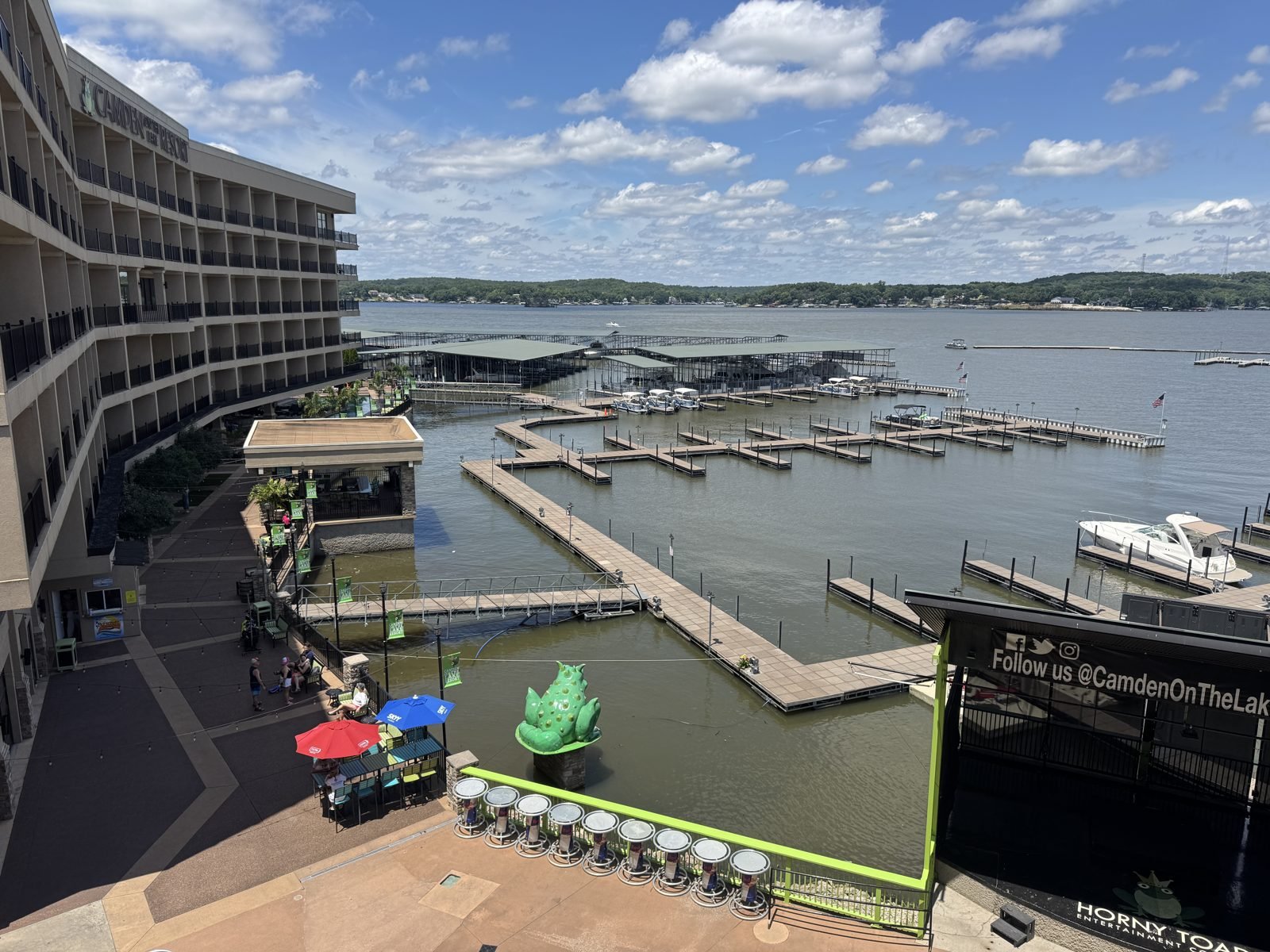
Marine Air Conditioning Repair at the Lake of the Ozarks
Marine air conditioning repair from Tri-State Mechanical Services diagnoses what stopped your boat’s air conditioner and fixes it in the slip at Lake of the Ozarks, so the vents blow cold again. We station a crew at the lake through the summer season, and we work on all makes and sizes of vessels.
- Factory authorized and certified — on Dometic, Cruisair and Marine Air.
- Repairs in warranty — and beyond the original manufacturer’s warranty.
- Since 1989, one promise to every customer — Your Satisfaction is 100% Guaranteed.
Schedule a Dockside Service Call
Tell us where the boat sits and what the unit is doing, and we’ll schedule a dockside service call at your slip.
Lake of the Ozarks line — in season
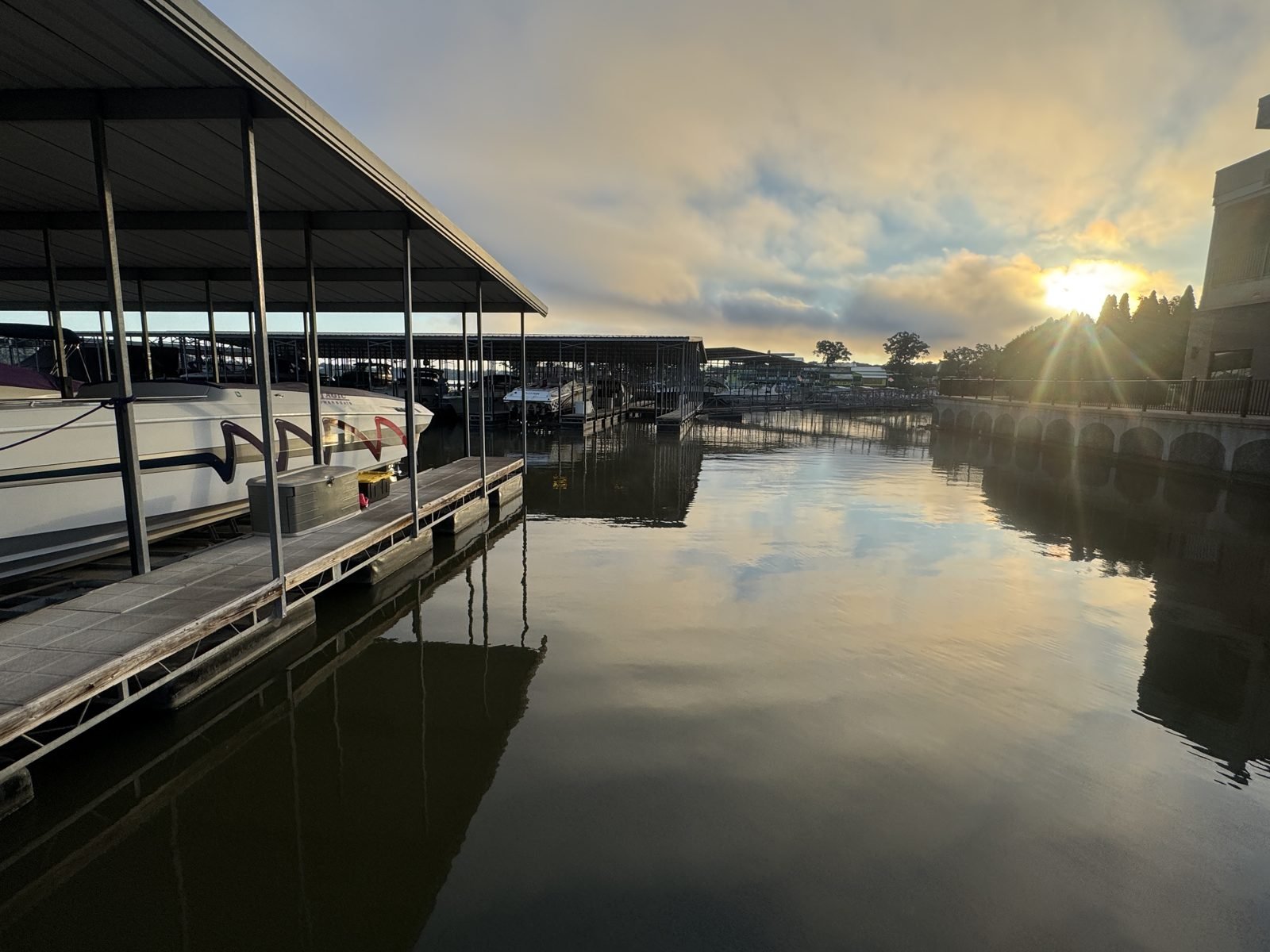
Marine Air Conditioning Repair and Service We Perform Dockside
Our marine air conditioning work runs from a single service call on a boat that will not cool through to a complete system refit, and all of it happens at your slip.
| What you can hire us for | What it covers |
|---|---|
| Dockside diagnosis and repair | A technician works on the unit where it sits aboard |
| Refrigerant work | Leak repair, recharge, compressor and component replacement |
| Raw water side repair | Sea strainer, raw water pump, condenser coil flush, condensate drain and pump |
| Replacement, repower and refit | New equipment, parts, installation, general system overhauls |
| Seasonal start-up and shut-down | Spring commissioning, and winterizing the raw water loop |
| Custom scheduled maintenance | Scheduled maintenance visits and maintenance agreements |
| Marine refrigeration and cabin air | Galley refrigerator, freezer box, water and ice making systems, air quality solutions |
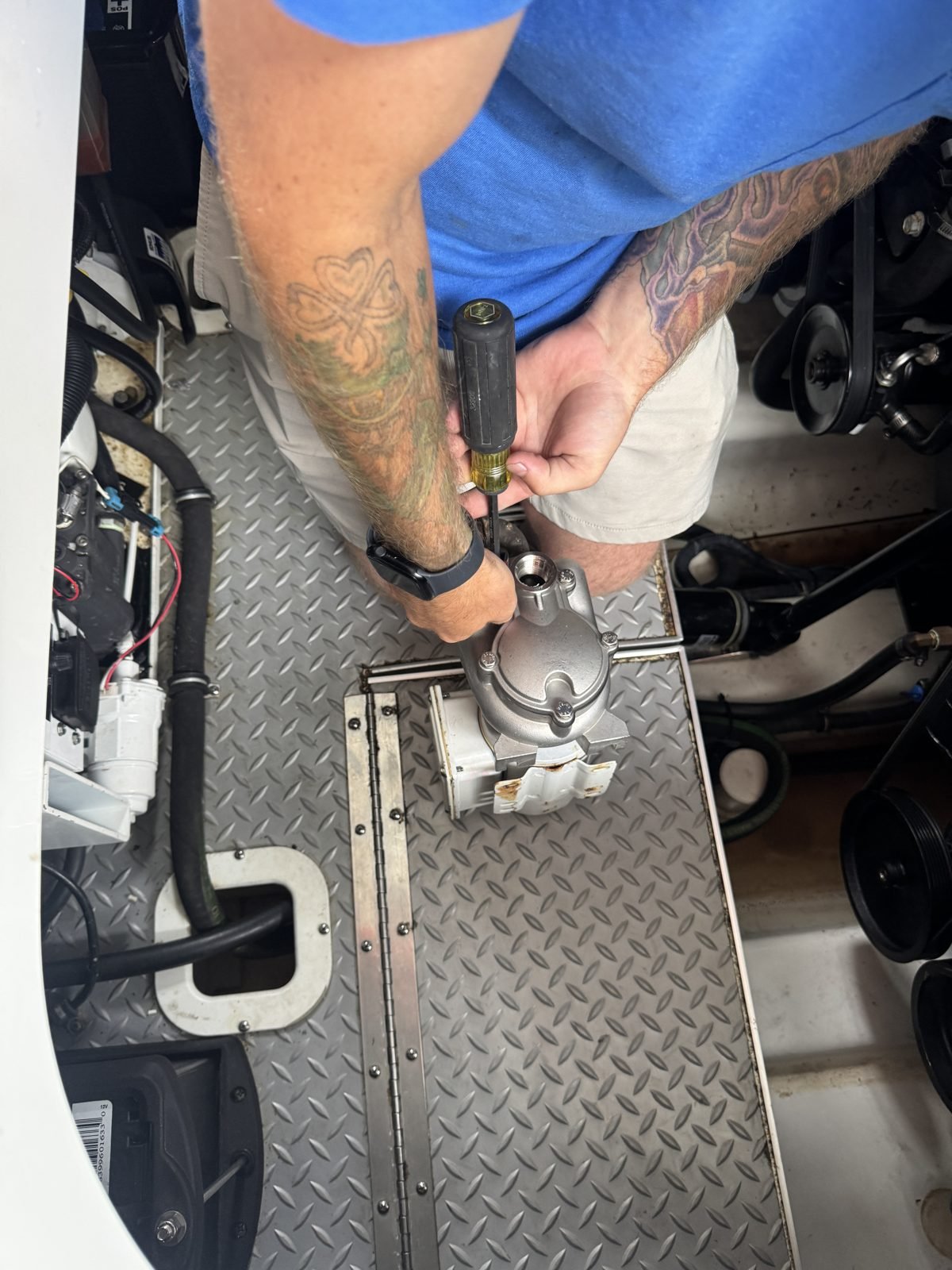
All of it happens with your boat in the water, in the slip where it already sits.
Boats and Systems We Work On
We service all makes and models of marine air conditioning equipment, on all makes and sizes of vessels, including the boat and yacht air conditioning found on most of this lake.
Systems we service
- Self-contained and split reverse-cycle marine air conditioners
- Direct expansion systems, and chilled water systems feeding an air handler in each cabin
- Compressors, condenser and evaporator coils, raw water pumps, sea strainers, hoses and thru-hull discharges
- Control heads, thermostats, capacitors, contactors, breakers and shore power connections
- Galley refrigerators, freezer boxes and onboard ice makers
- Cruisair, Marine Air, Dometic and Taylor Made equipment
Boats we work on
- Express cruisers, aft-cabin cruisers, motor yachts and sport yachts
- Houseboats, performance boats and liveaboard vessels
- Boats in wet slips and covered slips, on lifts, at marinas and private docks around Lake of the Ozarks
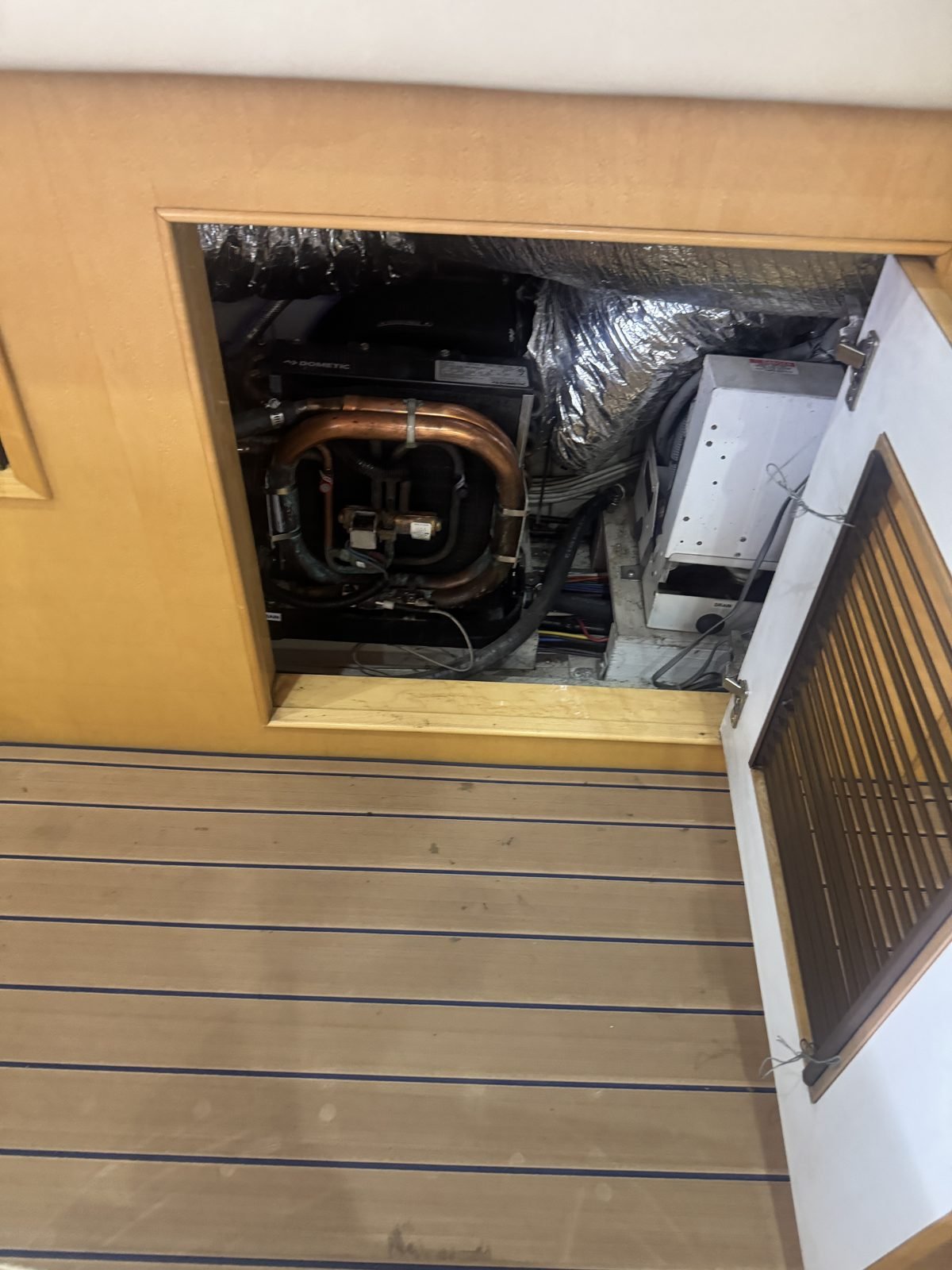
Your system’s architecture decides how big a repair can get. A direct expansion unit, self-contained or a split system, serves one or two cabins and is repaired or replaced on its own. A chilled water system runs the whole boat from one plant, so the fault sits in a cabin’s air handler or in the chiller serving all of them. Reverse-cycle units cool and heat on one refrigerant circuit, which is why a unit that cools but will not heat points at the reversing valve.
What Your Boat’s AC Will Do When the Repair Is Done
When we finish, your air conditioner holds setpoint through the hottest part of the afternoon without tripping the breaker or short cycling.
Good work looks like
- A strong, steady stream at the overboard discharge with the unit running
- A 15 to 20 degree temperature split between return and supply air
- A charge verified by superheat and subcooling, not by feel
- A dry condensate pan, a clear drain, no water in the bilge
- No fault codes at the control head
- Tidy hose routing and secured wiring left behind
You also get
- Cold air at the vents and a cabin that stays comfortable on a hot afternoon
- Heat again on reverse cycle for cool spring and fall nights
- The fault found and named, with what caused it explained
- Refrigeration and ice working for the trip
- A weekend on the water you keep rather than cancel
If your unit still cannot hold the cabin once the fault is repaired, the system is undersized for the space or the ducting is working against it, and we say so rather than keep replacing parts.
Marine AC Problems and What Usually Causes Them
A marine air conditioner that will not cool is more often starved of lake water than short of refrigerant, and that difference is the difference between a small repair and an expensive one.
A boat air conditioner rejects its heat into lake water rather than outside air. A seacock, a sea strainer, a raw water pump, a hose run and a water-cooled condenser coil carry that water out through the overboard discharge, and it is where most marine faults start.
| What you notice | What it usually points to |
|---|---|
| Blowing warm air, or cooling then quitting | A clogged sea strainer or an air-locked raw water pump |
| No cooling, weak or dry overboard discharge | A blocked strainer basket, a failed pump, a fouled condenser coil |
| Trips the circuit breaker, or will not start | A failed capacitor or contactor, or voltage drop on a long shore power cord |
| Frozen evaporator coil, weak airflow | A dirty return air filter or blocked grille, or a low refrigerant charge |
| Water in the bilge or under a berth | A blocked condensate drain, a slack hose, a dead condensate pump |
| Musty odor from the vents, mold on the return grille | A wet condensate pan with a dirty evaporator and filter |
| Cools but will not heat on reverse cycle | The reversing valve, not a separate heating system |
| Fault code on the control head, short cycling | A high-pressure fault from restricted water flow, or a switch reading it wrong |
| Refrigerator, freezer or ice maker warm | The same refrigeration circuit in a different box, serviced on the same call |
The Raw Water Loop: Sea Strainer, Pump and Condenser Coil
We start a no-cooling call at the water side, because that is where the fault usually is.
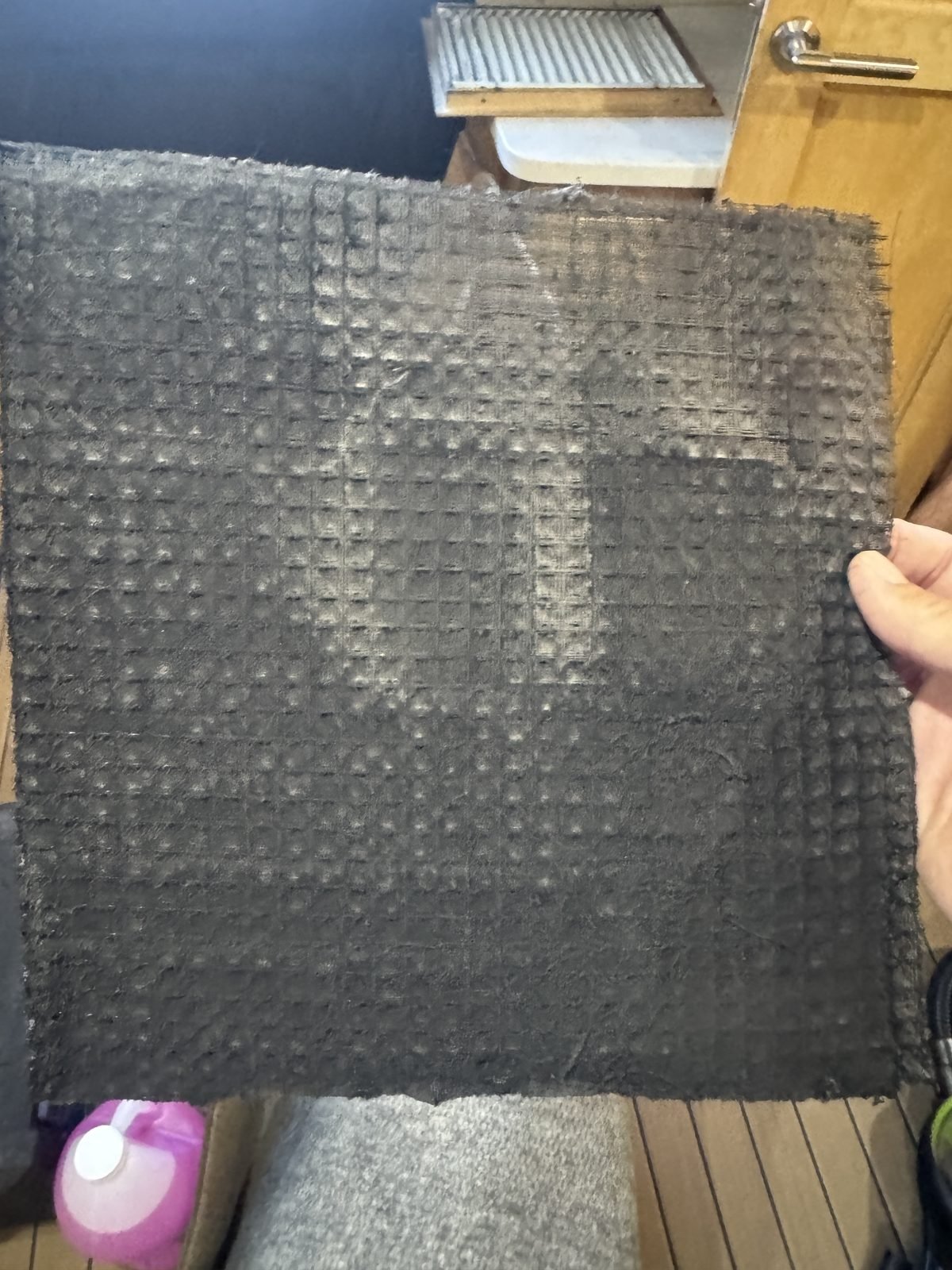
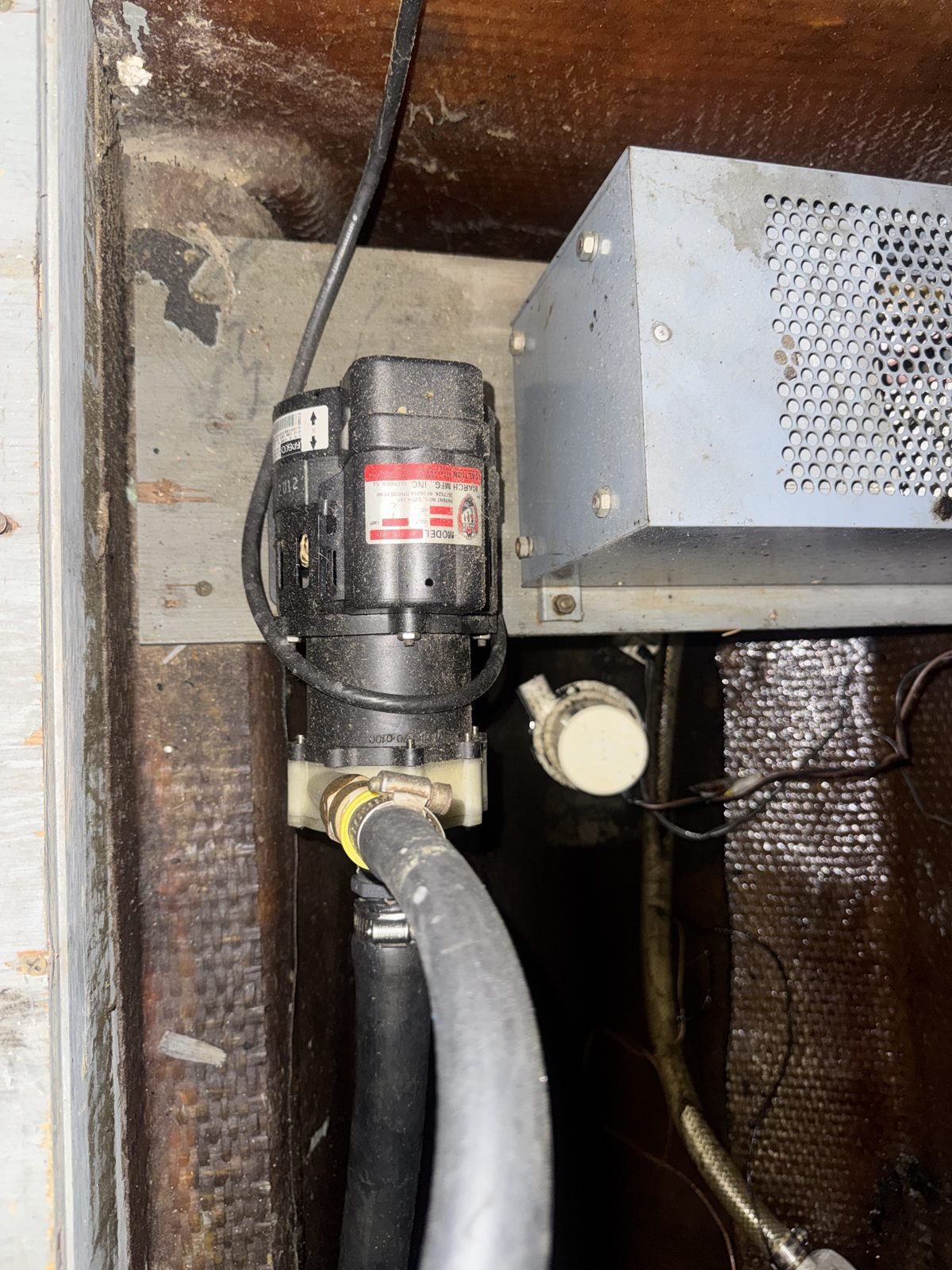
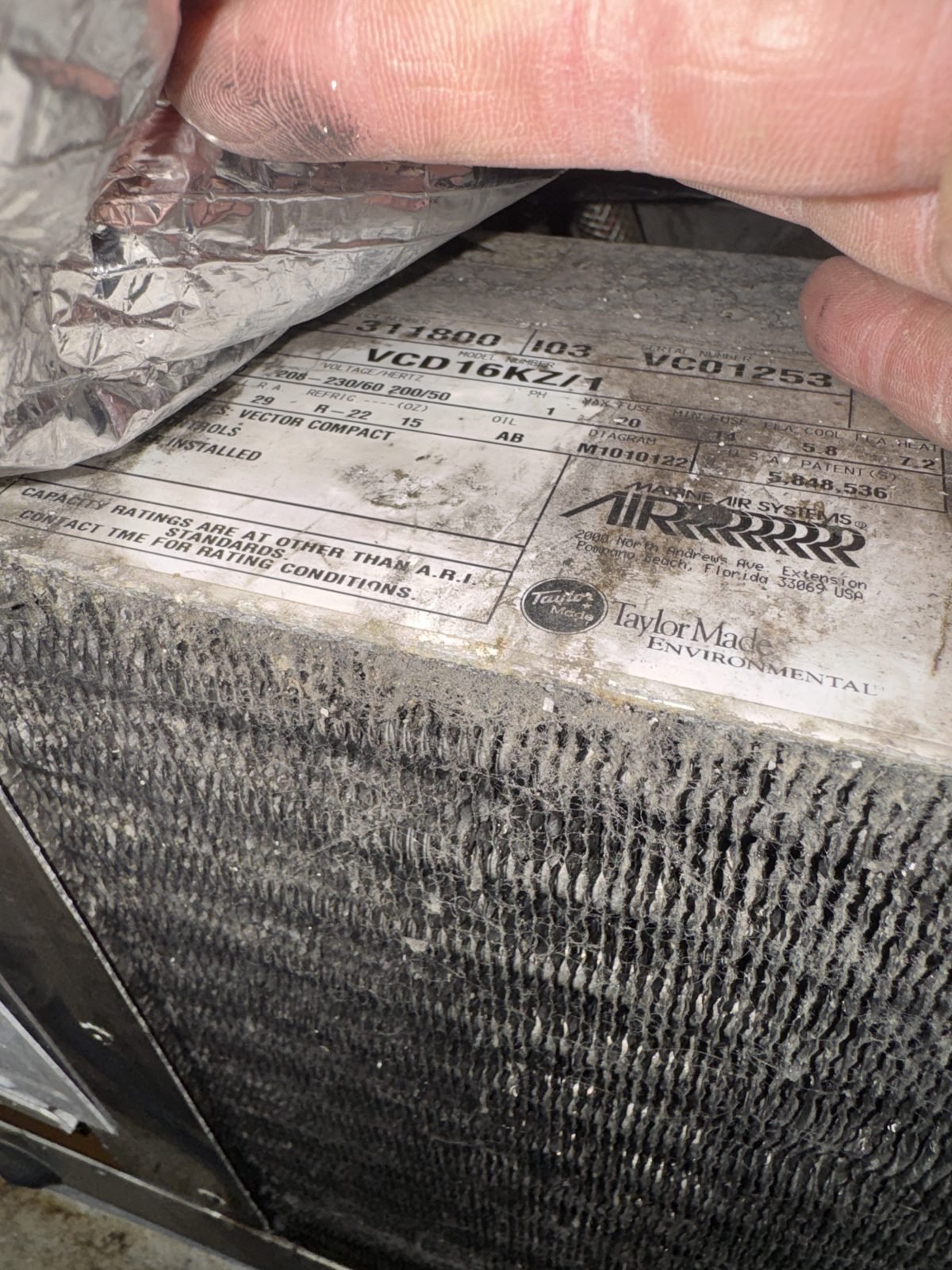
Look at the overboard discharge with your unit running. A strong, steady stream means water flow is fine and the fault is electrical or on the refrigerant side, while a weak stream or none at all points at the strainer or the pump. Telling us which one you saw shortens the visit. Lake water fouls a strainer faster than the manual expects: zebra mussels, shell debris, algae and silt collect in the strainer basket, and the same water scales the condenser coil over a season.
Low Refrigerant and Refrigerant Leaks
We repair refrigerant leaks, and we find the leak before we recharge anything.
Refrigerant sits in a sealed circuit, so a unit that is low is leaking, and a recharge on its own buys weeks rather than a season. We repair what is reachable at a joint, service port or hose, then weigh in a correct charge of R-410A or whatever your unit runs. A leak inside a coil or in the compressor shell becomes a component decision, and sometimes a whole-unit decision.
Breaker Trips When the Compressor Starts
We test the boat’s power under load before we condemn a compressor.
Marine compressors are sensitive to what the dock gives them. A long or undersized shore power cord, a tired pedestal, or a generator sagging under load causes hard starting and nuisance trips that look exactly like a failed compressor. That check is the difference between a small part and a unit replacement.
Your Dockside Service Call, Step by Step
A technician comes to your slip and works your system in the order the faults occur, so nobody puts gauges on the refrigerant circuit until the water side and the power side have checked out.
We verify flow at the overboard discharge, pull and clean the strainer basket, back-flush the loop, and descale a fouled condenser coil.
We test the raw water pump for prime, flow and impeller condition, and bleed air out of the loop.
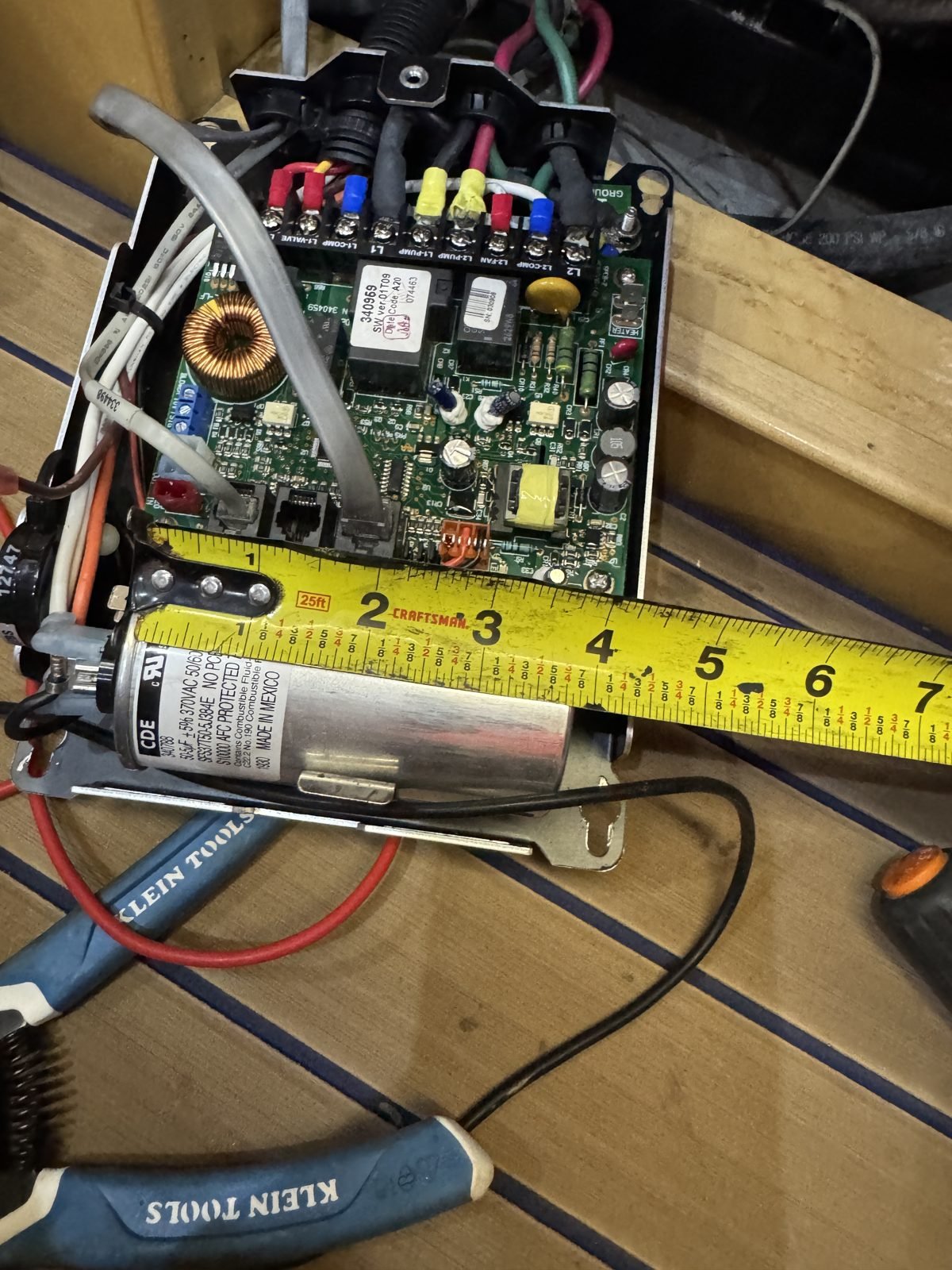
We test capacitors and contactors, check shore power voltage, and read fault codes at the control head.
We take suction and discharge pressures, measure the temperature split, calculate superheat and subcooling, and leak-check electronically before any recharge.
We clear the condensate drain, clean the evaporator and return air filter, then run the unit and check the discharge stream and the split before we leave.
A strainer that clears in the first step ends the visit there.
Marine AC Replacement, Repowers and Refits
We replace a marine air conditioner when repairing it has stopped making sense, and you hear which side of that line your unit is on before you spend anything on it.
A unit past its second compressor, running an obsolete refrigerant, or corroded through at the condenser coil is a replacement candidate. A unit with a failed raw water pump, capacitor, contactor or control head, or with a leak we can reach, is a repair. Age alone does not condemn a system, and parts for long-discontinued Cruisair and Marine Air units are often still available.
When replacement wins, we size the new unit by BTU against cabin volume, insulation and glass, then match it to the ducting, controls and electrical service already aboard. Bigger is not better here, because an oversized unit short cycles and dehumidifies poorly instead of cooling harder. We come right to your boat to install it, and a repower, a refit or a general system overhaul runs the same way.
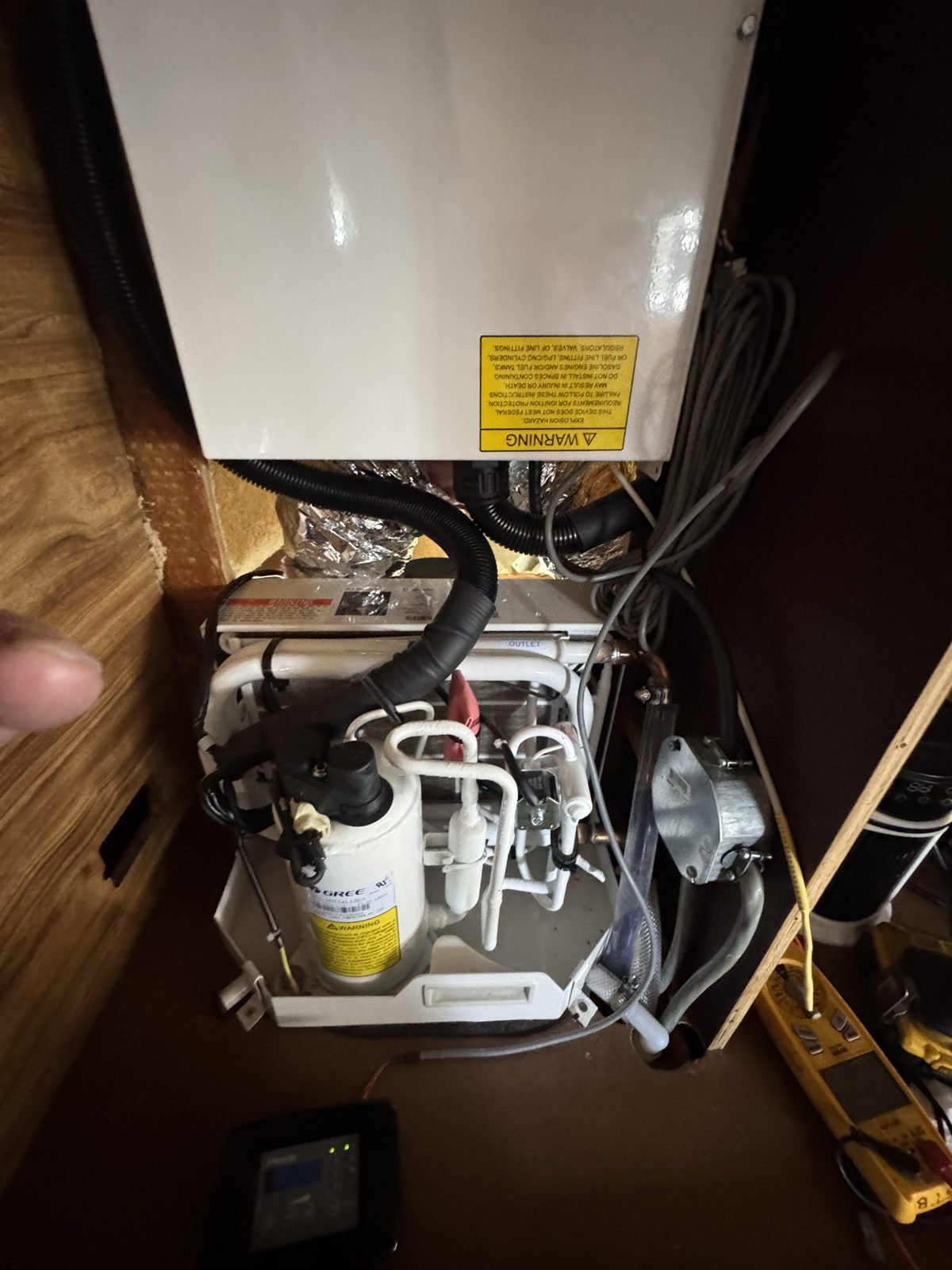
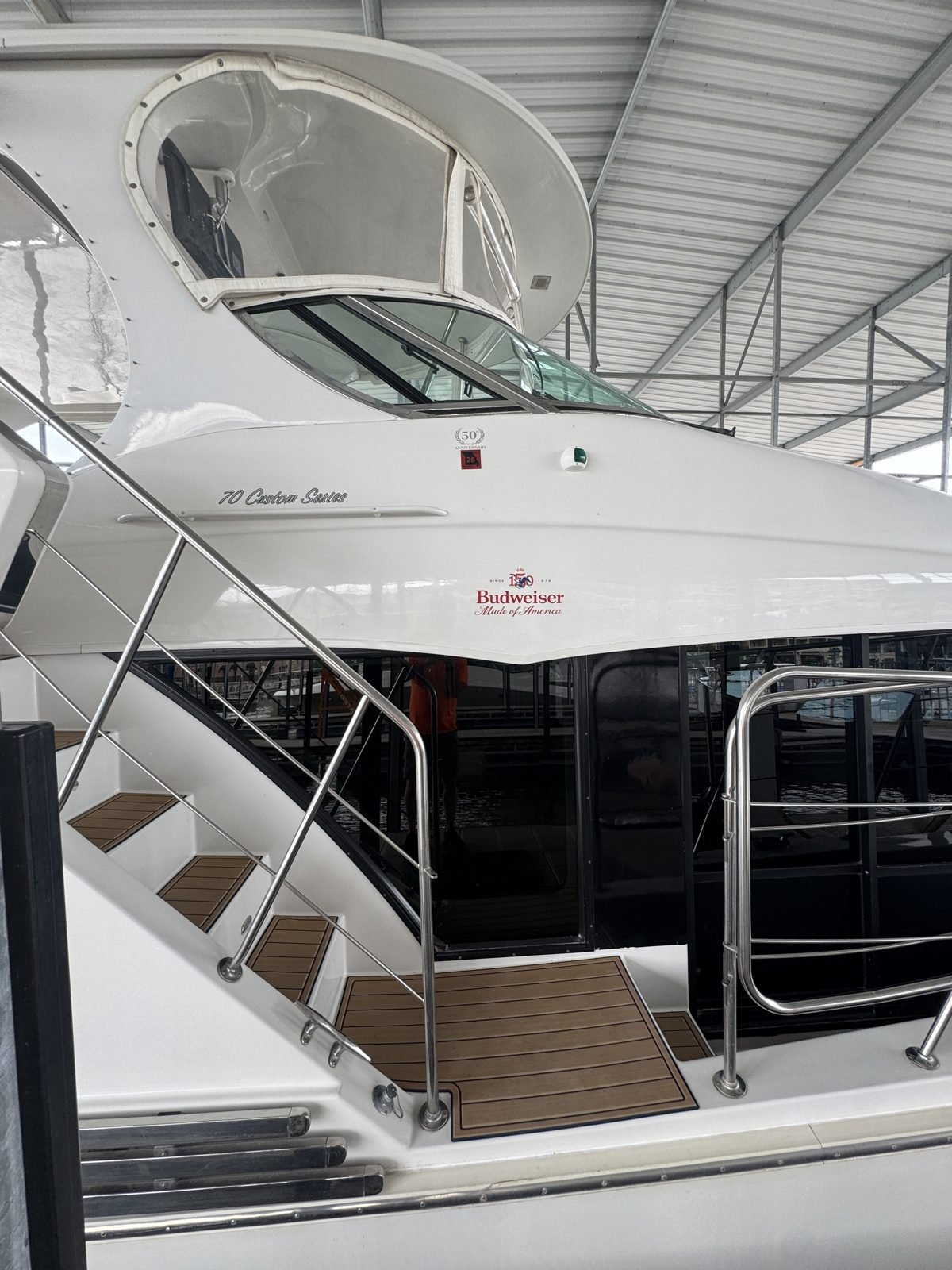
A Full-Vessel Project at the Lake
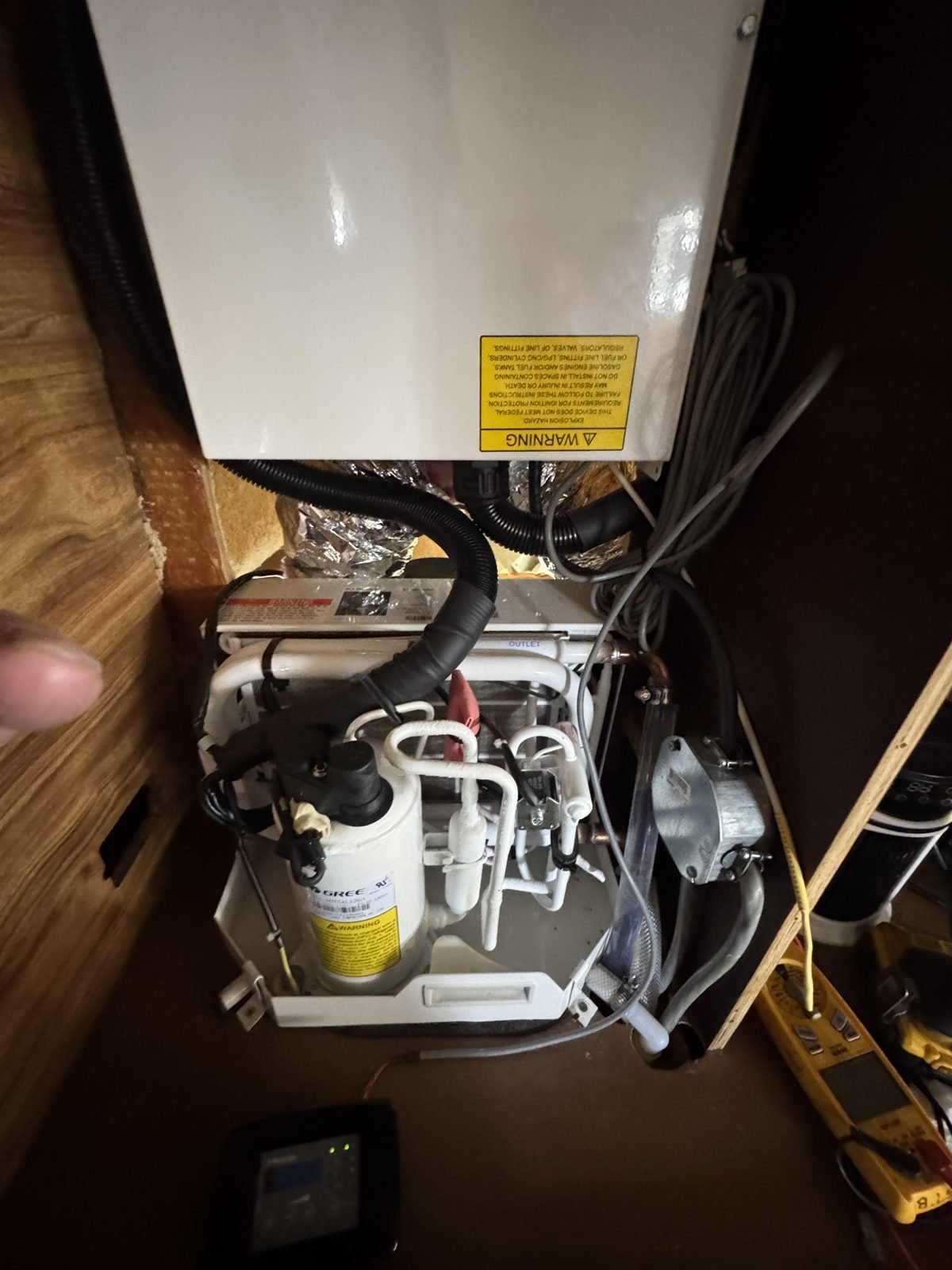
A full-vessel air conditioning project at the lake — multiple self-contained Cruisair units accessed and serviced in the slip, raw-water plumbing traced, electrical tested under load, and the system commissioned and handed back running.
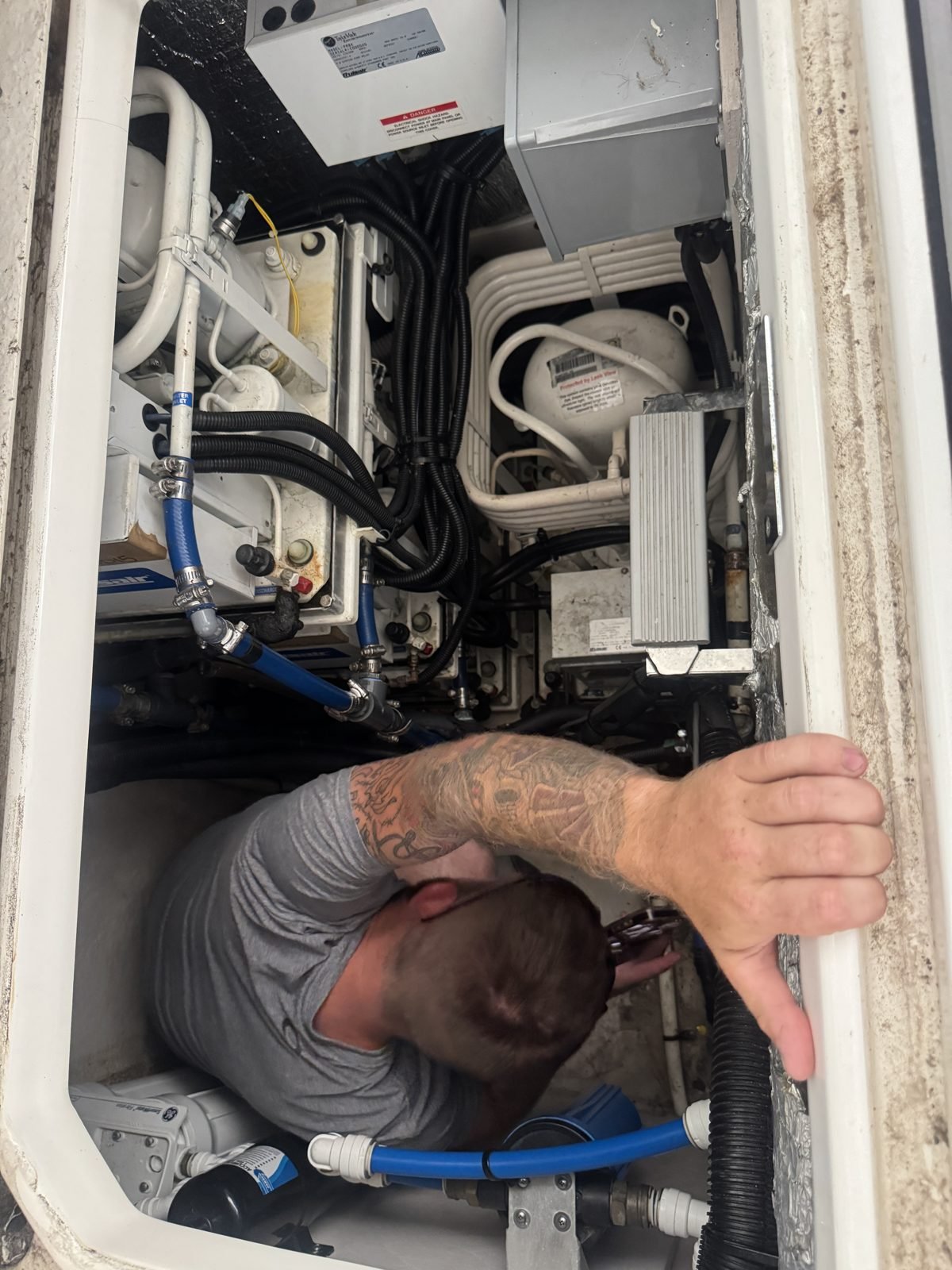
What Changes the Cost and Scope of a Repair
The price of a marine AC repair moves with what failed and how hard it is to reach, and those two account for most of the spread between one boat and the next.
- Water side or refrigerant side. A strainer clean at one end of the range, a compressor or a leaking coil at the other.
- Access to the unit. An open locker, or under a berth, behind a bulkhead, low in an engine room.
- System architecture. One self-contained unit, several zones, or a chilled water plant serving the whole boat.
- Repair or replacement. With replacement, the BTU size and how well a new unit matches what is already aboard.
- Warranty status. Whether your equipment is still in the manufacturer’s warranty or out of it.
- Parts availability. Older Cruisair and Marine Air models can take longer to source.
- Season and demand. Peak summer weekends are when every boat at the lake wants the same technician.
Access is why two boats with the same failed pump are not the same repair.
Seasonal Start-Up, Shut-Down and Scheduled Maintenance
Two scheduled visits keep a lake boat’s air conditioning working: a seasonal start-up in the spring and a seasonal shut-down in the fall.
At start-up we commission your system after layup, restore flow through the raw water loop, and verify that it cools before the season starts on you. At shut-down we winterize the raw water loop, running antifreeze through the circuit, because a freeze splits the pump housing, the hoses and the condenser coil, and that repair costs multiples of the visit that would have prevented it.
Between those two, lake water keeps loading your strainer basket far faster than a factory interval assumes. That is what custom scheduled maintenance on a lake boat is mostly about, and we set it up as scheduled visits or as a maintenance agreement.
The Guarantee Hasn’t Changed Since 1989
Our satisfaction guarantee has not changed since 1989: Your Satisfaction is 100% Guaranteed. Thousands of local boaters have come to count on that promise.
Where Our Crew Works at the Lake
Our crew is stationed at Lake of the Ozarks through the summer season, not dispatched from St. Louis on the day your unit quits. Lake Ozarks marine heating and cooling work is what that crew does all season.
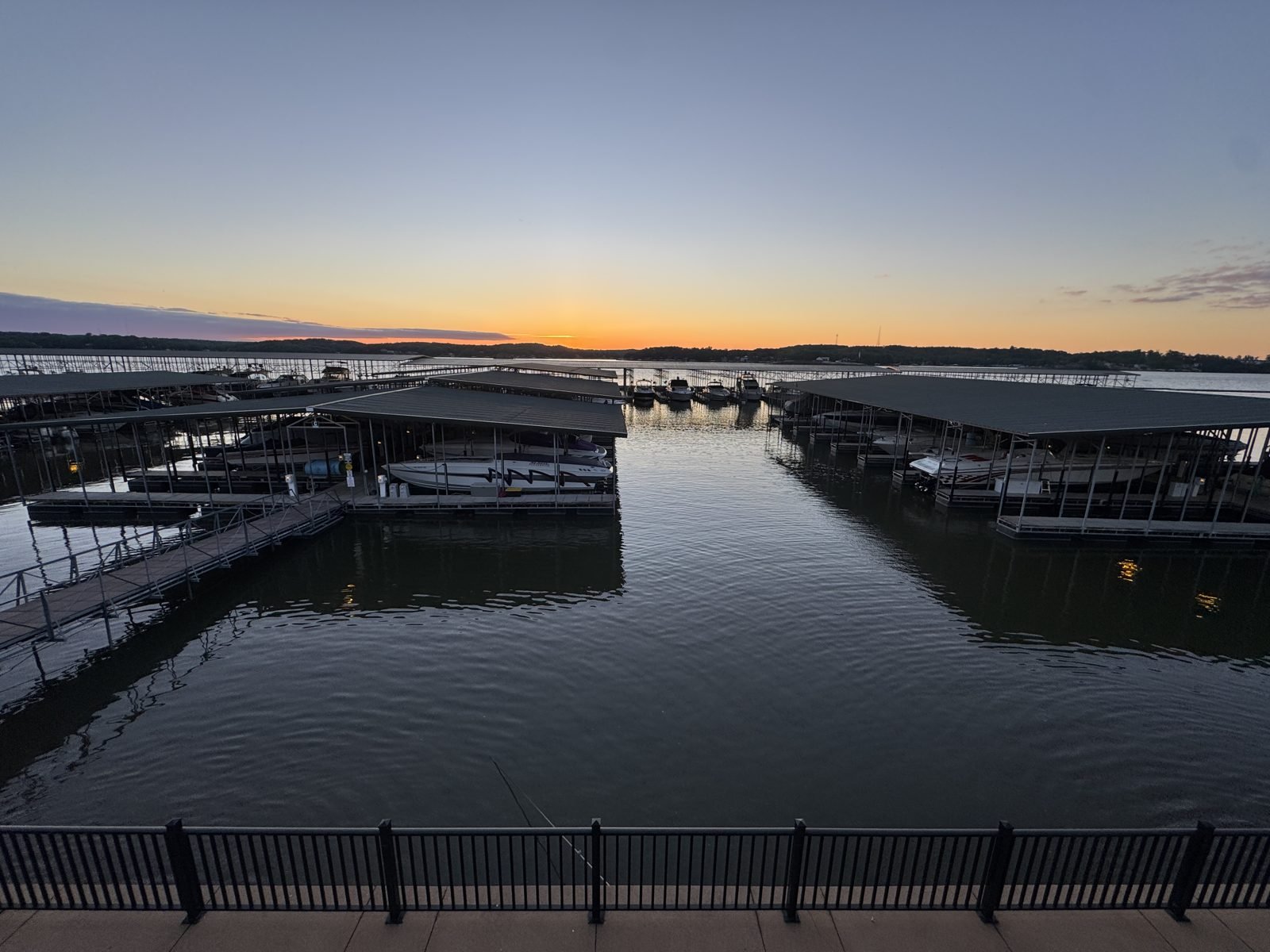
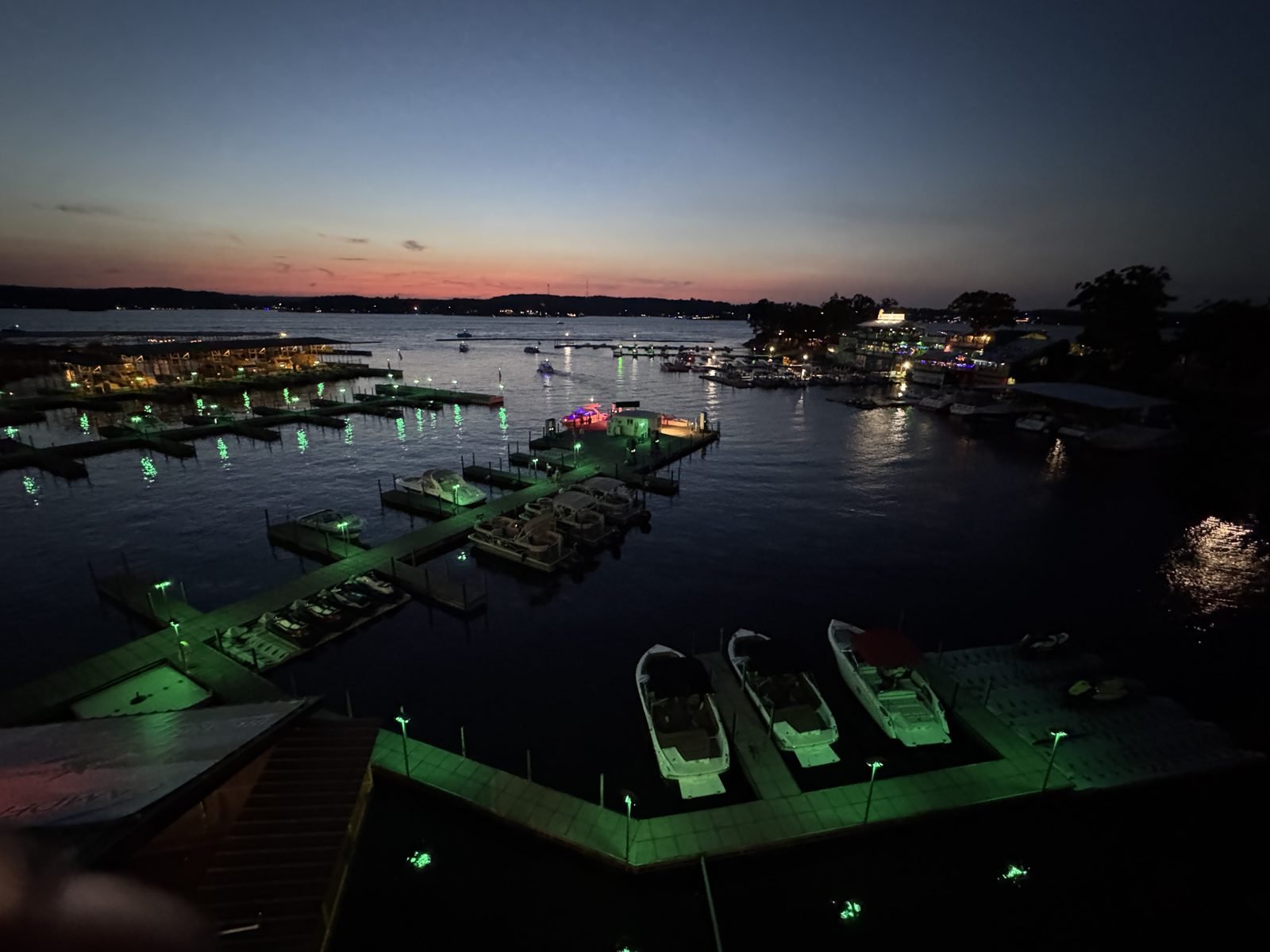
Tri-State Mechanical Services is a St. Louis mechanical contractor, with its main office on North Lindbergh Boulevard and a second in Hillsboro. The lake sits about four hours from that office, which is why we keep people on it in season and a central Missouri line that reaches them at 573-348-4555. We come to boats in wet slips and covered slips, on lifts, at marinas and private docks around the lake. Away from the water, our St. Louis and Jefferson County teams handle residential and commercial air conditioning repair.
Boat Owners Ask Us These Before They Book
Schedule a Dockside Service Call
Call 573-348-4555, tell us where your boat sits and what the unit is doing, and we will schedule a dockside service call at your slip. You can send the same details through our contact page. We find the fault and name the cause before we replace anything on your boat.